
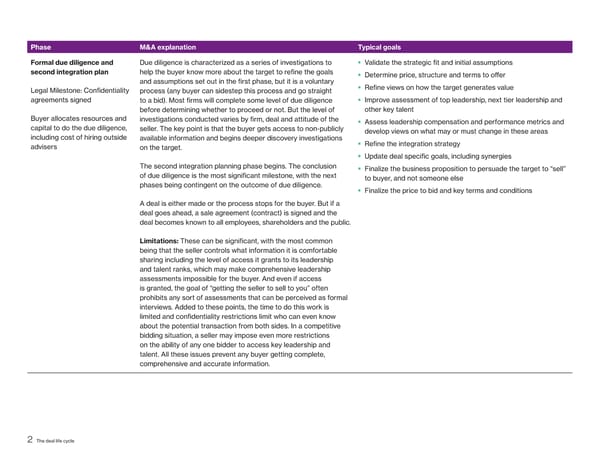
Phase M&A explanation Typical goals Formal due diligence and Due diligence is characterized as a series of investigations to ƒ Validate the strategic fit and initial assumptions second integration plan help the buyer know more about the target to refine the goals ƒ Determine price, structure and terms to offer and assumptions set out in the first phase, but it is a voluntary ƒ Refine views on how the target generates value Legal Milestone: Confidentiality process (any buyer can sidestep this process and go straight agreements signed to a bid). Most firms will complete some level of due diligence ƒ Improve assessment of top leadership, next tier leadership and before determining whether to proceed or not. But the level of other key talent Buyer allocates resources and investigations conducted varies by firm, deal and attitude of the ƒ Assess leadership compensation and performance metrics and capital to do the due diligence, seller. The key point is that the buyer gets access to non-publicly develop views on what may or must change in these areas including cost of hiring outside available information and begins deeper discovery investigations advisers on the target. ƒ Refine the integration strategy ƒ Update deal specific goals, including synergies The second integration planning phase begins. The conclusion ƒ Finalize the business proposition to persuade the target to “sell” of due diligence is the most significant milestone, with the next to buyer, and not someone else phases being contingent on the outcome of due diligence. ƒ Finalize the price to bid and key terms and conditions A deal is either made or the process stops for the buyer. But if a deal goes ahead, a sale agreement (contract) is signed and the deal becomes known to all employees, shareholders and the public. Limitations: These can be significant, with the most common being that the seller controls what information it is comfortable sharing including the level of access it grants to its leadership and talent ranks, which may make comprehensive leadership assessments impossible for the buyer. And even if access is granted, the goal of “getting the seller to sell to you” often prohibits any sort of assessments that can be perceived as formal interviews. Added to these points, the time to do this work is limited and confidentiality restrictions limit who can even know about the potential transaction from both sides. In a competitive bidding situation, a seller may impose even more restrictions on the ability of any one bidder to access key leadership and talent. All these issues prevent any buyer getting complete, comprehensive and accurate information. 2 The deal life cycle
 The Deal Life Cycle Page 1 Page 3