
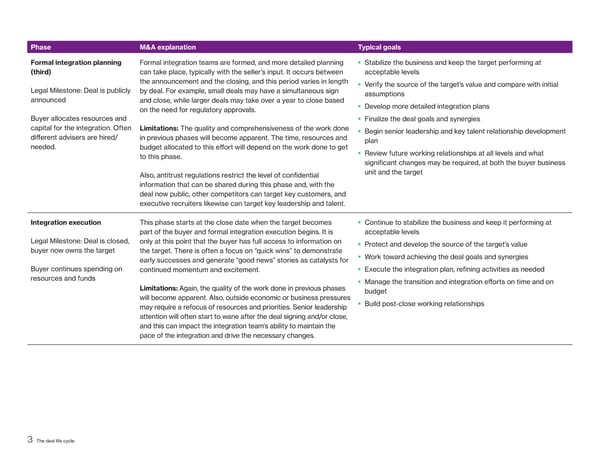
Phase M&A explanation Typical goals Formal integration planning Formal integration teams are formed, and more detailed planning ƒ Stabilize the business and keep the target performing at (third) can take place, typically with the seller’s input. It occurs between acceptable levels the announcement and the closing, and this period varies in length ƒ Verify the source of the target’s value and compare with initial Legal Milestone: Deal is publicly by deal. For example, small deals may have a simultaneous sign assumptions announced and close, while larger deals may take over a year to close based on the need for regulatory approvals. ƒ Develop more detailed integration plans Buyer allocates resources and ƒ Finalize the deal goals and synergies capital for the integration. Often Limitations: The quality and comprehensiveness of the work done ƒ Begin senior leadership and key talent relationship development different advisers are hired/ in previous phases will become apparent. The time, resources and plan needed. budget allocated to this effort will depend on the work done to get to this phase. ƒ Review future working relationships at all levels and what significant changes may be required, at both the buyer business Also, antitrust regulations restrict the level of confidential unit and the target information that can be shared during this phase and, with the deal now public, other competitors can target key customers, and executive recruiters likewise can target key leadership and talent. Integration execution This phase starts at the close date when the target becomes ƒ Continue to stabilize the business and keep it performing at part of the buyer and formal integration execution begins. It is acceptable levels Legal Milestone: Deal is closed, only at this point that the buyer has full access to information on ƒ Protect and develop the source of the target’s value buyer now owns the target the target. There is often a focus on “quick wins” to demonstrate early successes and generate “good news” stories as catalysts for ƒ Work toward achieving the deal goals and synergies Buyer continues spending on continued momentum and excitement. ƒ Execute the integration plan, refining activities as needed resources and funds ƒ Manage the transition and integration efforts on time and on Limitations: Again, the quality of the work done in previous phases budget will become apparent. Also, outside economic or business pressures ƒ Build post-close working relationships may require a refocus of resources and priorities. Senior leadership attention will often start to wane after the deal signing and/or close, and this can impact the integration team’s ability to maintain the pace of the integration and drive the necessary changes. 3 The deal life cycle
 The Deal Life Cycle Page 2 Page 4