The Deal Life Cycle
WHITE PAPER | 4 pages
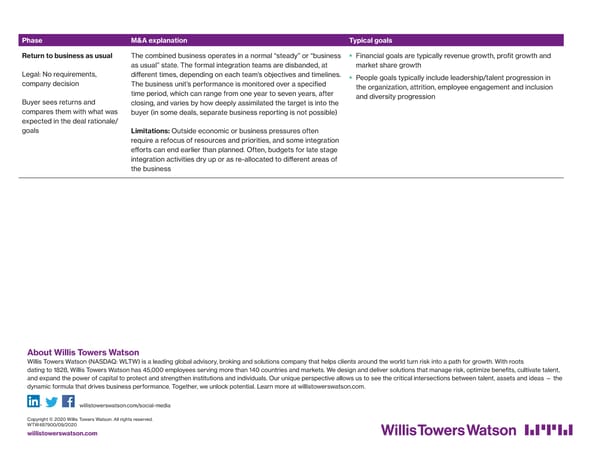
The deal life cycle Phase M&A explanation Typical goals Origination: Informal due This phase happens after the buyer has determined its overall ƒ Determine the target’s strategic fit in corporate or business unit diligence and first integration growth strategy and how acquisitions might support growth. strategy plan ƒ Discuss deal feasibility and initial price range The starting point for this article is when the buyer has identified a Legal Milestone: No target. The first conversations begin with the potential target. ƒ Assess how the target generates value requirement, a company ƒ Evaluate the target’s leadership and gather their views on the decision Limitations: This takes place without real detailed knowledge of deal strategy, and integration options that would enhance deal the target. success Buyer begins allocating ƒ Determine initial integration strategy resources and capital for this phase and the next ƒ Assess deal specific goals, including synergy goals ƒ Develop preliminary business proposition to persuade seller to sell to buyer (instead of some other firm, or not sell at all) ƒ Identify risks and priority areas for investigation in next phase ƒ Determine whether to proceed to formal due diligence
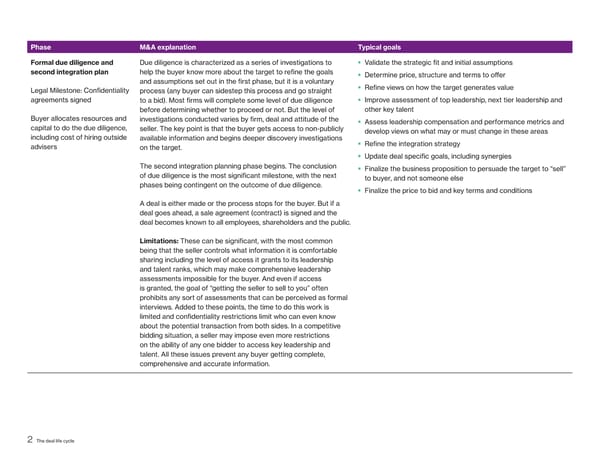
Phase M&A explanation Typical goals Formal due diligence and Due diligence is characterized as a series of investigations to ƒ Validate the strategic fit and initial assumptions second integration plan help the buyer know more about the target to refine the goals ƒ Determine price, structure and terms to offer and assumptions set out in the first phase, but it is a voluntary ƒ Refine views on how the target generates value Legal Milestone: Confidentiality process (any buyer can sidestep this process and go straight agreements signed to a bid). Most firms will complete some level of due diligence ƒ Improve assessment of top leadership, next tier leadership and before determining whether to proceed or not. But the level of other key talent Buyer allocates resources and investigations conducted varies by firm, deal and attitude of the ƒ Assess leadership compensation and performance metrics and capital to do the due diligence, seller. The key point is that the buyer gets access to non-publicly develop views on what may or must change in these areas including cost of hiring outside available information and begins deeper discovery investigations advisers on the target. ƒ Refine the integration strategy ƒ Update deal specific goals, including synergies The second integration planning phase begins. The conclusion ƒ Finalize the business proposition to persuade the target to “sell” of due diligence is the most significant milestone, with the next to buyer, and not someone else phases being contingent on the outcome of due diligence. ƒ Finalize the price to bid and key terms and conditions A deal is either made or the process stops for the buyer. But if a deal goes ahead, a sale agreement (contract) is signed and the deal becomes known to all employees, shareholders and the public. Limitations: These can be significant, with the most common being that the seller controls what information it is comfortable sharing including the level of access it grants to its leadership and talent ranks, which may make comprehensive leadership assessments impossible for the buyer. And even if access is granted, the goal of “getting the seller to sell to you” often prohibits any sort of assessments that can be perceived as formal interviews. Added to these points, the time to do this work is limited and confidentiality restrictions limit who can even know about the potential transaction from both sides. In a competitive bidding situation, a seller may impose even more restrictions on the ability of any one bidder to access key leadership and talent. All these issues prevent any buyer getting complete, comprehensive and accurate information. 2 The deal life cycle
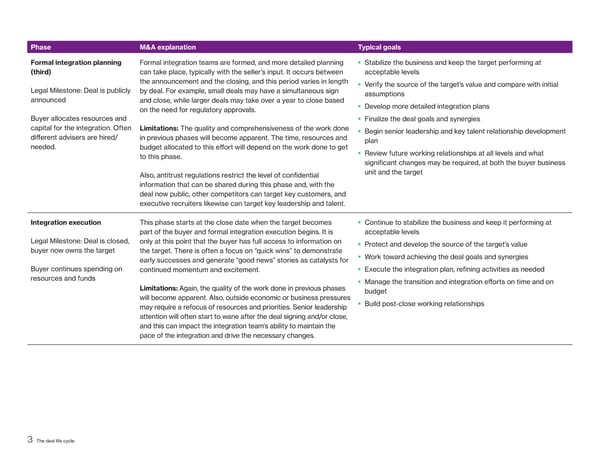
Phase M&A explanation Typical goals Formal integration planning Formal integration teams are formed, and more detailed planning ƒ Stabilize the business and keep the target performing at (third) can take place, typically with the seller’s input. It occurs between acceptable levels the announcement and the closing, and this period varies in length ƒ Verify the source of the target’s value and compare with initial Legal Milestone: Deal is publicly by deal. For example, small deals may have a simultaneous sign assumptions announced and close, while larger deals may take over a year to close based on the need for regulatory approvals. ƒ Develop more detailed integration plans Buyer allocates resources and ƒ Finalize the deal goals and synergies capital for the integration. Often Limitations: The quality and comprehensiveness of the work done ƒ Begin senior leadership and key talent relationship development different advisers are hired/ in previous phases will become apparent. The time, resources and plan needed. budget allocated to this effort will depend on the work done to get to this phase. ƒ Review future working relationships at all levels and what significant changes may be required, at both the buyer business Also, antitrust regulations restrict the level of confidential unit and the target information that can be shared during this phase and, with the deal now public, other competitors can target key customers, and executive recruiters likewise can target key leadership and talent. Integration execution This phase starts at the close date when the target becomes ƒ Continue to stabilize the business and keep it performing at part of the buyer and formal integration execution begins. It is acceptable levels Legal Milestone: Deal is closed, only at this point that the buyer has full access to information on ƒ Protect and develop the source of the target’s value buyer now owns the target the target. There is often a focus on “quick wins” to demonstrate early successes and generate “good news” stories as catalysts for ƒ Work toward achieving the deal goals and synergies Buyer continues spending on continued momentum and excitement. ƒ Execute the integration plan, refining activities as needed resources and funds ƒ Manage the transition and integration efforts on time and on Limitations: Again, the quality of the work done in previous phases budget will become apparent. Also, outside economic or business pressures ƒ Build post-close working relationships may require a refocus of resources and priorities. Senior leadership attention will often start to wane after the deal signing and/or close, and this can impact the integration team’s ability to maintain the pace of the integration and drive the necessary changes. 3 The deal life cycle
Phase M&A explanation Typical goals Return to business as usual The combined business operates in a normal “steady” or “business ƒ Financial goals are typically revenue growth, profit growth and as usual” state. The formal integration teams are disbanded, at market share growth Legal: No requirements, different times, depending on each team’s objectives and timelines. ƒ People goals typically include leadership/talent progression in company decision The business unit’s performance is monitored over a specified the organization, attrition, employee engagement and inclusion time period, which can range from one year to seven years, after and diversity progression Buyer sees returns and closing, and varies by how deeply assimilated the target is into the compares them with what was buyer (in some deals, separate business reporting is not possible) expected in the deal rationale/ goals Limitations: Outside economic or business pressures often require a refocus of resources and priorities, and some integration efforts can end earlier than planned. Often, budgets for late stage integration activities dry up or as re-allocated to different areas of the business About Willis Towers Watson Willis Towers Watson (NASDAQ: WLTW) is a leading global advisory, broking and solutions company that helps clients around the world turn risk into a path for growth. With roots dating to 1828, Willis Towers Watson has 45,000 employees serving more than 140 countries and markets. We design and deliver solutions that manage risk, optimize benefits, cultivate talent, and expand the power of capital to protect and strengthen institutions and individuals. Our unique perspective allows us to see the critical intersections between talent, assets and ideas — the dynamic formula that drives business performance. Together, we unlock potential. Learn more at willistowerswatson.com. willistowerswatson.com/social-media Copyright © 2020 Willis Towers Watson. All rights reserved. WTW487900/09/2020 willistowerswatson.com